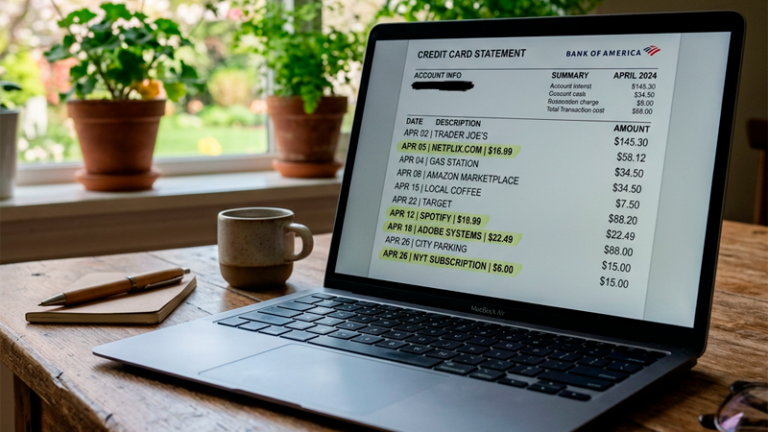
You don’t notice it at first. A dollar here, two dollars there. Then one day you check your bank statement and realize you’re paying far more than you expected for services you barely think about. Subscription price increases rarely feel dramatic, but over time they quietly reshape your monthly expenses.
This isn’t just about streaming platforms or apps. It affects software, delivery services, fitness memberships, cloud storage, even basic digital tools. The real issue is not the price increase itself, but how easily it slips past your attention until it compounds into a real financial leak.
Small increases feel harmless until they stack
Most companies avoid large, sudden price hikes. Instead, they rely on gradual adjustments. A streaming service might go from $9.99 to $11.99, then to $13.99 within a couple of years.
Individually, those changes don’t trigger strong reactions. But combined across multiple subscriptions, the effect becomes noticeable.
Let’s say you have:
6 subscriptions averaging $10 per month
Each increases by $3 over time
That’s an extra $18 per month, or $216 per year.
What felt like minor adjustments turns into a recurring cost that rivals a utility bill. And because these increases are spread out, most people don’t connect them immediately.
Why companies rely on passive acceptance
There’s a reason subscription services follow this model. It works.
Most users don’t cancel over small price increases. Not because they agree with them, but because the friction of canceling feels higher than the cost itself.
You have to:
Log into your account
Find the cancellation option
Consider losing access
Possibly re-enter information later if you return
That small inconvenience is enough to keep people paying, even when the value has dropped.
Companies understand this behavior well. They don’t need to convince you to stay. They just need you to do nothing.
The hidden shift from value to habit
At the beginning, you subscribe for a clear reason. You want a specific service, content, or feature. Over time, that reason fades, but the payment continues.
This is where the problem becomes less visible.
Subscriptions slowly move from intentional spending to automatic behavior. You’re no longer evaluating whether the service is worth the price. You’re just used to having it.
That shift makes price increases more dangerous. You’re paying more for something you may no longer actively use.
How free trials quietly turn into long-term costs
Many subscriptions start with a free trial or discounted period. That lowers resistance and encourages quick decisions.
The issue isn’t the trial itself. It’s what happens after.
You sign up quickly
You forget the renewal date
The full price kicks in automatically
Now combine that with future price increases, and the cost grows without a conscious decision at any stage.
A service that felt “free” at the start can turn into a multi-year expense without ever being re-evaluated.
That’s how small commitments turn into long-term financial habits.
One overlooked mistake that makes everything worse
Most people track large expenses. Rent, car payments, groceries. But subscriptions often stay invisible.
They’re split across different billing dates and platforms, making them harder to notice as a group.
The mistake is not reviewing subscriptions as a single category.
If you look at them individually, each one seems manageable. When you group them, the picture changes.
For example:
Streaming services $45
Software tools $30
Delivery memberships $20
Cloud storage and extras $15
That’s $110 per month, or $1,320 per year.
Seeing the total changes how you evaluate each service.
A simple strategy that actually works
You don’t need a complex system to control subscription costs. What matters is consistency.
Start with a quarterly review. Every three months, go through all active subscriptions and ask two questions:
Did I use this in the last 30 days
Would I sign up again at the current price
If the answer is no to either, cancel it.
This approach removes emotion and focuses on current value, not past decisions.
Another useful tactic is delaying new subscriptions. Instead of signing up immediately, wait 48 hours. That small pause filters out impulsive decisions.
When a price increase is actually justified
Not every price increase is unreasonable. Some services improve over time, adding features, content, or convenience that genuinely enhance value.
The key is recognizing the difference.
A justified increase usually comes with:
Noticeable improvements
New functionality you actually use
Better performance or reliability
If the service feels the same but costs more, you’re likely paying for inertia, not value.
That distinction helps you decide whether to stay or move on.
The long-term impact most people ignore
Subscriptions don’t just affect your monthly budget. They influence your financial flexibility.
An extra $50 to $100 per month might not feel critical. But over a year, that’s $600 to $1,200 that could have gone toward savings, investments, or reducing higher-interest debt.
The real cost of subscriptions is not just what you pay, but what you give up by continuing to pay.
That’s the part rarely considered when deciding whether to keep or cancel a service.
Subscription price increases are designed to blend into the background. They rely on habit, convenience, and inattention more than on actual value. If you don’t actively review what you’re paying for, those small adjustments will keep stacking until they reshape your budget without you noticing.
And by the time it becomes obvious, you’ve already paid for months or years of services you didn’t truly need.