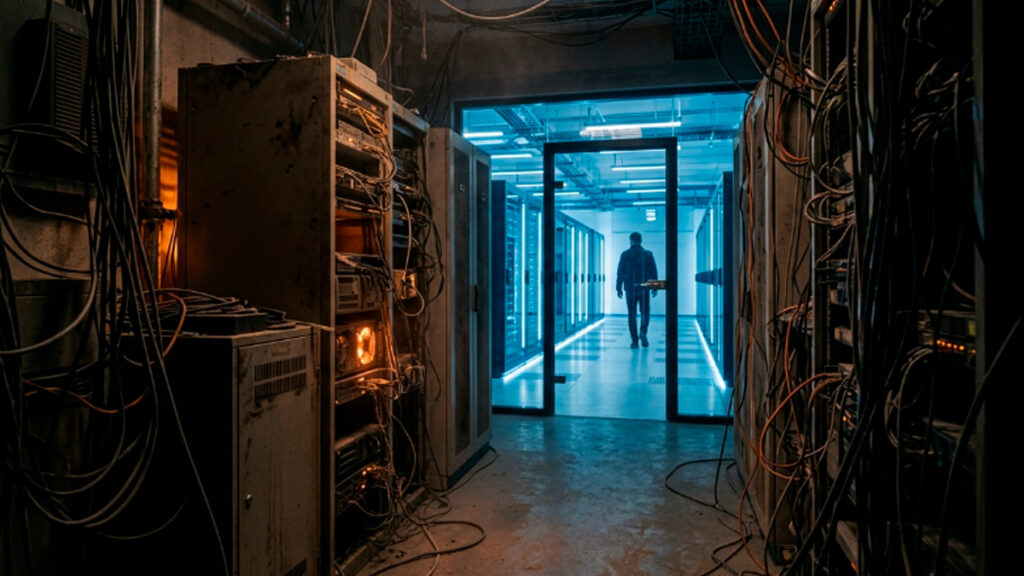
Many business owners look at a humming server room and see a paid-off asset, completely ignoring the invisible financial bleeding happening behind those locked doors. Maintaining physical servers past their standard warranty period introduces an escalating series of unpredictable repair expenses. When you keep a five-year-old local server running, you are essentially gambling with your core operational stability just to delay a capital expenditure.
The illusion of free operation crumbles the moment a crucial motherboard fails and stalls your entire workforce for three days. Companies often sink thousands of dollars into emergency overnight shipping for obsolete replacement parts, wiping out any theoretical savings they thought they achieved. Holding onto depreciated hardware always guarantees higher operational expenses compared to planned upgrade cycles. Every single month that passes pushes these aging systems closer to total failure, turning a predictable IT budget into a chaotic mess of emergency repair invoices.
Maintenance Contracts Quickly Outpace Replacement Value
Extending support agreements for aging enterprise equipment represents one of the most inefficient uses of corporate capital available. Third-party vendors charge massive premiums to guarantee service level agreements on hardware they no longer manufacture. You might think spending five thousand dollars on an extended warranty makes sense, but you are effectively paying a premium just to keep obsolete technology barely functioning.
When an IT department spends fifty percent of its time patching failing hardware, your actual labor costs double without delivering any new value to the company. Paying senior network engineers to act as mechanics for dying machines wastes expensive talent that should be driving revenue-generating projects forward. Relying on specialized contractors to maintain outdated systems often results in invoice shocks reaching tens of thousands of dollars per incident. Business leaders frequently underestimate the cumulative drain of these continuous minor repairs until the annual IT audit reveals the shocking total expenditure.
Running ancient operating systems on legacy physical machines creates massive blind spots in your corporate defense network that hackers actively exploit. A single ransomware attack exploiting an unpatched legacy server can paralyze a mid-sized company and force bankruptcy within months. Security vendors eventually stop writing patches for older operating environments, leaving your sensitive customer data completely exposed to modern automated exploits.
When cybercriminals breach these neglected systems, the resulting regulatory fines for data negligence often exceed two million dollars for healthcare and financial institutions. Attempting to isolate old servers behind firewalls rarely provides adequate protection against sophisticated internal network lateral movement tactics. The cost of implementing temporary security workarounds for outdated hardware heavily outweighs the price of migrating to modern secure platforms. Ignoring these glaring vulnerabilities essentially guarantees a devastating breach that will shatter customer trust and destroy years of hard-earned brand reputation.
Hidden Energy Consumption Hits the Monthly Utility Bill
Older generations of enterprise processors draw significantly more electrical power while delivering a fraction of the computational throughput of modern alternatives. Running inefficient legacy hardware drastically increases your monthly commercial electricity bills and requires expensive supplemental cooling systems to prevent overheating. Most accounting departments fail to separate server room power usage from general office utilities, hiding a massive area of potential financial optimization.
Replacing a rack of ten outdated servers with modern virtualized equivalents routinely cuts related energy expenditures by over sixty percent immediately. The intense heat generated by aging power supplies forces commercial air conditioning units to run continuously, wearing out expensive HVAC infrastructure prematurely. Companies operating large legacy server rooms waste tens of thousands of dollars annually simply keeping obsolete silicon at acceptable operating temperatures. Modernizing your physical footprint provides an immediate reduction in monthly operational overhead that goes straight back into your available liquid capital.
Lost Productivity and the Frustration of Slow Operations
Outdated computational resources bottleneck daily employee workflows and actively prevent your team from utilizing modern enterprise software applications. When employees wait several minutes for legacy databases to process basic queries, the company bleeds thousands of dollars in wasted hourly wages. Old server environments frequently lack the necessary processing power to run complex data analytics, forcing staff to rely on manual spreadsheet calculations.
Operating on sluggish hardware destroys workplace morale because staff members constantly fight against the technology instead of focusing on their actual jobs. You cannot expect a high-performing sales team to close deals effectively when their client relationship management tools constantly freeze during critical customer calls. The invisible cost of daily system lag vastly outweighs the perceived savings of delaying a comprehensive server upgrade. Investing in responsive technology directly translates to faster output and dramatically higher employee retention rates across all departments.
Evaluating the True Price of Staying Grounded
Refusing to modernize corporate infrastructure usually stems from an intense fear of migration downtime rather than logical financial planning. Clinging to outdated local servers guarantees a steady erosion of company profits through unexpected downtime and inflated maintenance contracts. Business leaders must conduct brutal total cost of ownership calculations that include lost productivity and excessive energy consumption.
Transitioning away from legacy hardware eliminates unpredictable emergency expenditures and allows organizations to forecast IT budgets with absolute precision. Making the difficult decision to decommission familiar but failing equipment protects the business from catastrophic data loss and regulatory nightmares. Investing in modern infrastructure represents a fundamental necessity for survival rather than a simple operational upgrade. Those who delay this modernization inevitably pay a massive penalty in both immediate financial losses and destroyed competitive advantage.
Used only with old Urchin versions of Google Analytics and not with GA.js. Was used to distinguish between new sessions and visits at the end of a session.
End of session (browser)
__utmz
Contains information about the traffic source or campaign that directed user to the website. The cookie is set when the GA.js javascript is loaded and updated when data is sent to the Google Anaytics server
6 months after last activity
__utmv
Contains custom information set by the web developer via the _setCustomVar method in Google Analytics. This cookie is updated every time new data is sent to the Google Analytics server.
2 years after last activity
__utmx
Used to determine whether a user is included in an A / B or Multivariate test.
18 months
_ga
ID used to identify users
2 years
_gali
Used by Google Analytics to determine which links on a page are being clicked
30 seconds
_ga_
ID used to identify users
2 years
_gid
ID used to identify users for 24 hours after last activity
24 hours
_gat
Used to monitor number of Google Analytics server requests when using Google Tag Manager
1 minute
_gac_
Contains information related to marketing campaigns of the user. These are shared with Google AdWords / Google Ads when the Google Ads and Google Analytics accounts are linked together.
90 days
__utma
ID used to identify users and sessions
2 years after last activity
__utmt
Used to monitor number of Google Analytics server requests
10 minutes
__utmb
Used to distinguish new sessions and visits. This cookie is set when the GA.js javascript library is loaded and there is no existing __utmb cookie. The cookie is updated every time data is sent to the Google Analytics server.