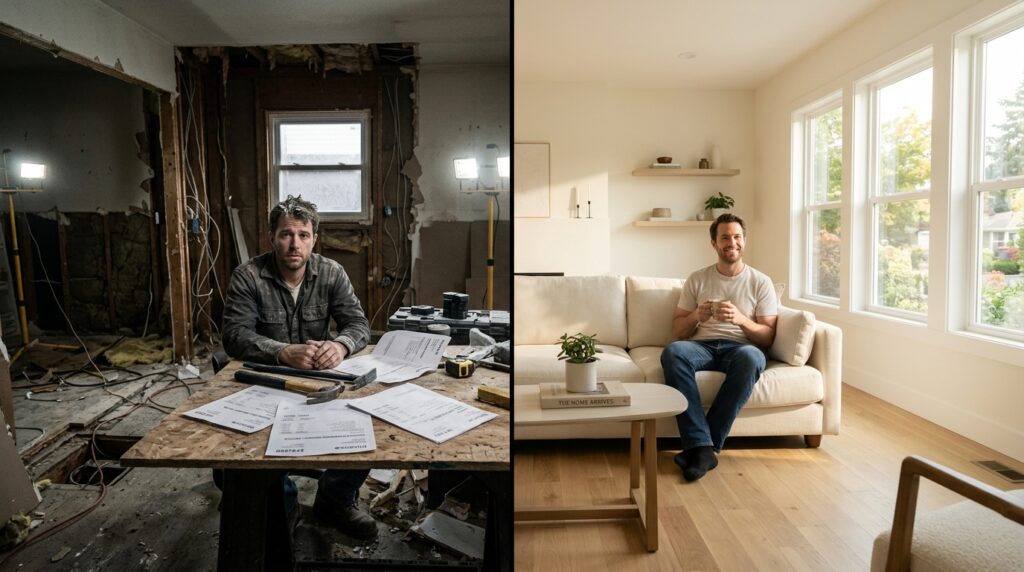
Falling in love with a severely discounted property often masks a series of brutal financial realities that most first-time buyers completely ignore. Many people assume that buying a distressed house and fixing it up over the weekends will automatically result in massive equity gains and a perfect dream home. However, a lower upfront purchase price rarely guarantees a profitable or even affordable final investment. You must carefully analyze your actual operational budget before committing to a project that demands endless cash injections just to become habitable. The romance of a massive renovation project quickly fades when unexpected plumbing disasters completely drain your emergency fund within the first month.
Paying an extra $50,000 for a finished house might actually be a much smarter financial move than spending $80,000 out of pocket on scattered repairs. We need to look closely at the severe psychological toll, the hidden carrying costs, the fluctuating material prices, and the massive risk of contractor fraud. Buyers completely overlook the inevitable structural surprises, the expensive permit application fees, the sudden property tax increases, the temporary housing expenses, and the massive loss of personal time that come with these major residential overhauls.
Evaluating the Initial Purchase Price Against Real Renovation Demands
Securing a mortgage for a dilapidated property might seem like a brilliant maneuver to bypass high market interest rates and avoid fierce bidding wars. Buyers routinely underestimate the massive difference between the appraised baseline value and the total capital required to bring the building up to modern livability standards. If you purchase a home for $250,000 but need to immediately invest $120,000 in foundational repairs, your actual baseline cost is $370,000. You have to factor in the soaring costs of raw building materials and the exorbitant hourly rates charged by licensed professionals in tight labor markets.
Many overly optimistic investors forget that standard residential mortgages only cover the current condition of the real estate asset rather than the future potential. Securing a specialized renovation loan carries significantly higher interest rates and demands strict oversight from cautious lending institutions. You will likely face strict timeline constraints and mandatory inspections that slow down every single phase of your planned improvements. Every time a municipal inspector finds a code violation, you face costly delays and immediate financial penalties. Those unexpected municipal demands usually result in budget overruns averaging around 30 percent above the initial contractor estimates. Adding expensive municipal permits, heavy industrial dumpster rental fees, local temporary storage units, and specialized architectural drawings to your spreadsheet is absolutely mandatory before signing any closing documents. You also need to heavily budget for complex utility reconnections, dangerous hazardous material removal, unforeseen immediate property tax reassessments, and expensive builder risk insurance premiums.
Contractor Delays and Supply Chain Nightmares Can Drain Your Savings
Relying on initial construction estimates without a substantial contingency fund is a catastrophic financial mistake that routinely bankrupts inexperienced buyers. Even the most reputable construction teams suffer from unpredictable scheduling conflicts and sudden material shortages that completely derail your planned move-in date. Paying a double mortgage for six consecutive months while waiting for custom kitchen cabinets will utterly destroy your liquid cash reserves. You must consider the heavy monthly carrying costs associated with maintaining two separate residences during a prolonged construction phase. The devastating financial bleeding happens slowly through extended utility bills, duplicate overlapping property taxes, and continuous rent payments while your new investment sits empty and unfinished.
Managing a major home overhaul essentially becomes an unpaid full-time job that requires constant supervision and aggressive negotiation skills. Homeowners who fail to lock in fixed-price contracts frequently face arbitrary price hikes halfway through their critical renovation projects. When you encounter a severe supply chain bottleneck, the cost of premium lumber or specialized electrical panels can easily double overnight without any prior warning. This unpredictable environment makes it incredibly difficult to maintain a highly accurate project spreadsheet or forecast your final out-of-pocket expenditure. Furthermore, settling for cheaper replacement materials to save money mid-project often negatively impacts the long-term resale value of the home. Protecting your investment requires maintaining a minimum 20 percent emergency buffer strictly allocated for inevitable labor disputes and sudden logistical failures.
Living in a Construction Zone Carries Invisible Lifestyle Costs
Choosing to live inside the property while actively tearing down walls introduces a severe psychological burden that fractures family dynamics. Breathing in harmful drywall dust and lacking access to a functional kitchen for weeks forces you to spend excessive amounts of money on daily takeout meals. Relying on expensive restaurant deliveries and convenient fast food easily adds thousands of dollars to your monthly household budget. You are directly trading your personal comfort and health for a supposedly vastly better financial outcome that remains highly theoretical until the project finishes. Most people completely fail to calculate the daily physical exhaustion and the severe loss of productivity at their actual paying jobs due to constant environmental stress.
The constant presence of strange workers inside your private living space creates an overwhelming lack of privacy and security over an extended period. Waking up to the sound of heavy demolition machinery every single morning at dawn completely obliterates your baseline mental health. Taking time off work to supervise the daily installation progress directly results in irrecoverable lost wages and missed career opportunities that rarely factor into the initial property math. You must rigorously measure these intangible lifestyle sacrifices against the projected equity gains promised by enthusiastic real estate agents. Sometimes the messy temporary living arrangements require booking an expensive long-term hotel stay or renting a fully furnished corporate apartment just to escape the chaotic mess. Ultimately, the dangerous hidden stress factors combined with the constantly escalating convenience costs create a massive invisible financial drain that rapidly diminishes the perceived value of your real estate bargain.
Navigating Unexpected Structural Failures After Closing
Skipping invasive specialized inspections during the closing period frequently results in discovering catastrophic foundational damage weeks after taking official ownership. Standard home inspections rarely uncover deeply hidden nightmares like active termite infestations, severely degraded sewer lines, or dangerous outdated electrical wiring hiding behind fresh paint. Replacing a collapsed main sewer line out to the city connection can instantly evaporate $15,000 from your carefully planned renovation budget. You suddenly find yourself redirecting funds meant for high-end cosmetic upgrades toward completely invisible structural necessities that add zero immediate visual appeal. It is highly common to uncover dangerous hidden black mold or banned asbestos insulation the moment your demolition crew removes the first layer of drywall.
Dealing with environmental hazards requires hiring certified remediation specialists who charge premium emergency rates for their highly regulated services. Discovering a failing roof truss system immediately halts all interior cosmetic work until the primary load-bearing structures are permanently secured. You are legally forced to prioritize fundamental safety requirements and strictly enforced local building codes over installing your desired luxury interior finishes or your highly anticipated premium imported hardwood flooring. These mandatory structural corrections severely inflate your massive baseline construction debt and drastically extend your extended project completion timeline by several unpredictable months. Before finalizing any purchase contract on an older home, securing a comprehensive structural engineering report and an advanced plumbing camera inspection is a absolutely crucial step. The devastating long-term financial impact of ignoring these critical hidden structural flaws will completely erase your highly anticipated profit margins.
Making a Calculated Investment Rather Than an Emotional Bet
Buying a heavily distressed property should always remain a cold mathematical calculation rather than a romanticized television makeover fantasy. You have to separate your grand personal vision from the harsh realities of local labor shortages, fluctuating material costs, and strict municipal building regulations. Purchasing a completely finished home at a higher premium often provides vastly superior financial stability and immediate peace of mind. Knowing your exact monthly mortgage obligation without fearing sudden emergency contractor invoices allows for much safer secure long-term wealth planning and highly consistent portfolio growth. Turnkey properties simply eliminate the severe investment unpredictability that comes with tearing apart an aging structure filled with decades of undocumented patch jobs.
Success in the real estate market requires brutally honest self-awareness regarding your actual project management skills and your true tolerance for financial risk. Walking away from a seemingly incredibly cheap house is often the single most profitable decision an inexperienced homebuyer can possibly make. You must critically evaluate your accessible liquid cash reserves, your immediate access to reliable credit, and your capacity to handle severe unexpected budgetary shocks without facing personal bankruptcy. Sometimes paying top dollar for modern upgraded essential infrastructure and new energy-efficient major appliances generates a vastly superior return on investment than attempting a massive DIY overhaul. Prioritizing guaranteed immediate property habitability and verified structural integrity prevents the absolute financial ruin commonly associated with deeply speculative real estate gambles.
Used only with old Urchin versions of Google Analytics and not with GA.js. Was used to distinguish between new sessions and visits at the end of a session.
End of session (browser)
__utmz
Contains information about the traffic source or campaign that directed user to the website. The cookie is set when the GA.js javascript is loaded and updated when data is sent to the Google Anaytics server
6 months after last activity
__utmv
Contains custom information set by the web developer via the _setCustomVar method in Google Analytics. This cookie is updated every time new data is sent to the Google Analytics server.
2 years after last activity
__utmx
Used to determine whether a user is included in an A / B or Multivariate test.
18 months
_ga
ID used to identify users
2 years
_gali
Used by Google Analytics to determine which links on a page are being clicked
30 seconds
_ga_
ID used to identify users
2 years
_gid
ID used to identify users for 24 hours after last activity
24 hours
_gat
Used to monitor number of Google Analytics server requests when using Google Tag Manager
1 minute
_gac_
Contains information related to marketing campaigns of the user. These are shared with Google AdWords / Google Ads when the Google Ads and Google Analytics accounts are linked together.
90 days
__utma
ID used to identify users and sessions
2 years after last activity
__utmt
Used to monitor number of Google Analytics server requests
10 minutes
__utmb
Used to distinguish new sessions and visits. This cookie is set when the GA.js javascript library is loaded and there is no existing __utmb cookie. The cookie is updated every time data is sent to the Google Analytics server.