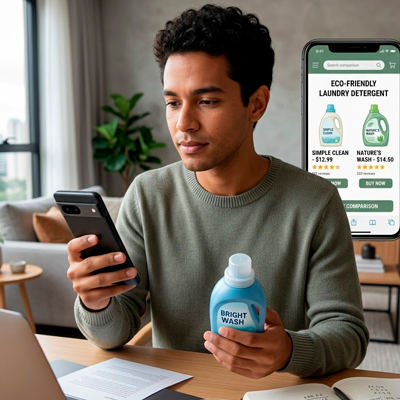
Across different categories, individuals are increasingly taking time to evaluate alternatives before choosing products or services. Instead of selecting the first option they find, many people prefer to observe elements such as usefulness, simplicity, and compatibility with daily routines.
This behavior reflects a gradual shift toward more attentive decision-making, where individuals aim to avoid unnecessary complications and focus on solutions that feel practical over time.
Comparing alternatives has become a common step in many everyday situations, especially when people want to feel more confident about their choices.
Access to information has simplified comparisons
Digital access has made it easier to observe differences between products and services. Individuals can now review general characteristics, identify practical features, and evaluate how different options may align with their expectations.
Having access to basic information may help reduce uncertainty when analyzing available alternatives.
Many individuals prefer to gather enough information to understand whether a product or service may provide consistent usefulness.
Rather than relying only on first impressions, consumers often look for elements that demonstrate clarity and practicality.
This approach may contribute to more stable decision-making patterns.
Practical benefits are becoming more noticeable
Products that clearly demonstrate how they can simplify daily activities often receive more attention. Individuals frequently consider whether a solution may help save time, reduce effort, or improve organization.
Practical benefits may include:
ease of integration into routines
simple usability
consistent performance
straightforward functionality
These aspects may help individuals feel more comfortable choosing options that align with their expectations.
When practicality is evident, decision-making may feel more natural and less complicated.
Observing practical benefits may contribute to more confident choices.
Simplicity often supports better user experience
Solutions that offer intuitive functionality may help individuals complete tasks more efficiently. Simplicity may reduce the need for unnecessary adjustments, allowing people to focus on what matters most in their routine.
Many individuals prefer solutions that do not require extensive learning processes.
Clear structure and accessible features may contribute to a more convenient experience.
Simplicity does not necessarily mean limited functionality, but rather functionality designed to be easily understood.
When simplicity is present, individuals may feel more comfortable maintaining consistent usage.
Ease of use may contribute to more predictable results over time.
Everyday decisions are becoming more intentional
People are gradually adopting more attentive approaches when evaluating available options. Rather than acting impulsively, many individuals prefer to observe whether a product or service may remain useful beyond the initial moment.
This behavior may help reduce the likelihood of frequent replacements or adjustments.
Intentional decision-making may contribute to improved organization, especially when individuals aim to maintain balance between convenience and practicality.
Careful observation of everyday needs may help individuals identify solutions that better support their routines.
Gradual improvements in evaluation habits may create more consistent patterns.
Over time, this approach may support more stable consumption behavior.
Balanced evaluation may improve long-term satisfaction
When individuals consider practicality, usability, and compatibility with daily routines, they may feel more confident about their decisions.
Rather than focusing exclusively on temporary impressions, many people evaluate whether an option may continue providing value over time.
Observing patterns in personal preferences may help individuals identify which solutions feel more aligned with their expectations.
Adopting a balanced perspective may contribute to more consistent, practical, and well-informed choices across different categories.
As comparison habits continue evolving, individuals may find it easier to navigate available options with greater clarity.