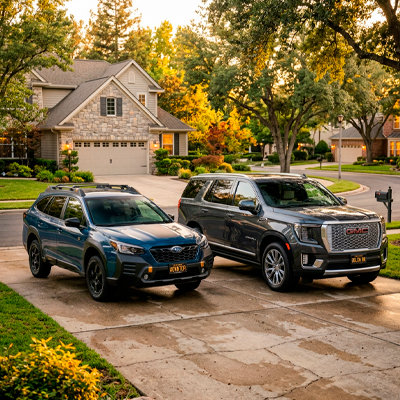
A common scene plays out in dealerships across the country.
A couple arrives looking for a practical vehicle. They compare crossovers, midsize SUVs, and larger family-oriented models. At some point, the conversation shifts toward future possibilities.
What if relatives visit often?
What if more cargo space becomes necessary?
What if road trips become more frequent?
Those questions frequently lead buyers toward three-row SUVs.
The decision feels sensible.
After all, having extra space sounds better than not having enough.
Months or years later, many owners discover they paid significantly more for seating, cargo capacity, and vehicle size that spend most of their time unused.
The realization often arrives after ownership costs start accumulating.
A third row that spends most of its life folded down
The three-row SUV has become one of the most popular vehicle categories in America.
Manufacturers market these vehicles as flexible family solutions capable of handling vacations, sports equipment, large shopping trips, and unexpected passenger needs.
For some households, those capabilities are genuinely valuable.
For many others, however, the extra seating becomes an occasional feature rather than a daily necessity.
Owners frequently drive alone or with one passenger. School runs may involve only two children, and most grocery trips require only a fraction of the available cargo space.
Many three-row SUVs operate as two-row vehicles almost every day.
The additional capacity often remains unused for weeks at a time.
Paying for space that rarely serves a purpose can become an expensive habit.
The purchase is not necessarily a mistake.
However, buyers benefit from understanding the difference between occasional needs and everyday needs before making a long-term financial commitment.
The price difference extends beyond the dealership sticker
Larger vehicles almost always come with a higher purchase price.
That part is obvious.
What receives less attention is the chain reaction created by spending more money upfront.
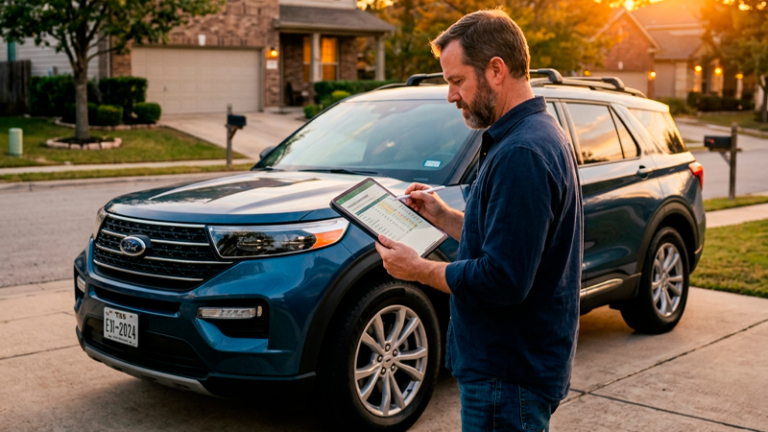
A more expensive vehicle generally leads to a larger loan, higher monthly payments, increased sales taxes, and greater depreciation exposure.
The financial gap can become surprisingly large.
A buyer spending $8,000, $10,000, or even $15,000 more for a larger SUV may focus primarily on the monthly payment difference.
Yet the long-term cost includes much more than financing.
Every additional dollar spent on the vehicle influences multiple ownership expenses.
The purchase price becomes the foundation for several future costs.
A bigger vehicle often creates a bigger financial commitment in ways buyers do not initially notice.
Many consumers focus on what they can afford today while overlooking the long-term financial consequences of a larger purchase.
Fuel economy penalties rarely feel dramatic until years pass
Most SUV buyers understand that larger vehicles consume more fuel.
The challenge is that fuel costs arrive gradually.
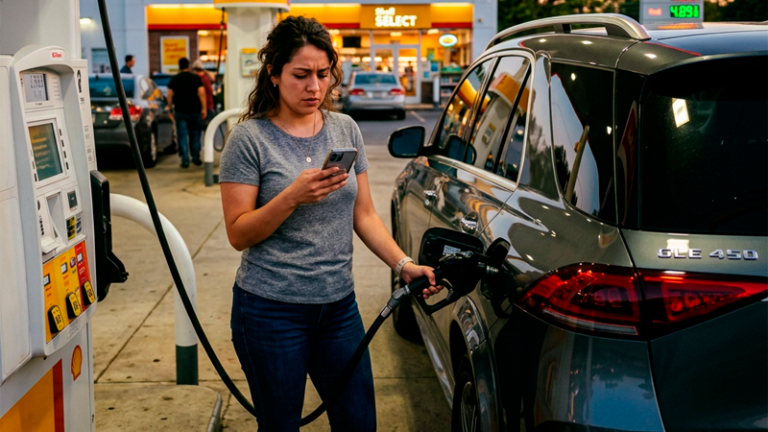
Unlike a major repair bill, fuel spending is distributed across hundreds of visits to gas stations, making the expense feel less significant.
An SUV averaging 22 miles per gallon may not appear drastically different from one averaging 28 miles per gallon.
Over a single week, the difference might seem minor.
Over five years of ownership, the story can look very different.
Thousands of miles accumulate.
Fuel prices fluctuate.
Additional consumption continues month after month.
A few extra gallons each week can quietly become thousands of dollars over time.
Small efficiency differences become meaningful when ownership lasts several years.
Long-term operating costs deserve as much attention as purchase costs.
For households trying to maintain an efficient transportation budget, fuel economy remains one of the most important variables.
Parking lots often reveal the practical reality
Vehicle shopping frequently focuses on major events such as road trips, family gatherings, vacations, and large shopping excursions.
Daily life is usually much less dramatic.
Commuting, errands, school pickups, parking garages, and crowded retail centers make up the majority of vehicle usage.
This is where size begins affecting convenience.
Larger SUVs often require more parking space, can feel less comfortable in tight environments, and may create additional stress in crowded areas.
Some owners eventually realize they optimized their purchase around situations that occur only a few times each year.
Vehicles should be evaluated based on everyday use rather than occasional exceptions.
The average day matters more than the rare day.
Many buyers prioritize hypothetical situations over actual driving patterns.
The difference may seem subtle, but it often has a significant impact on ownership satisfaction.
Modern two-row SUVs solved many of yesterday’s space problems
Part of the reason larger SUVs became popular is that older compact and midsize models offered limited interior flexibility.
That reality has changed.
Modern two-row SUVs provide impressive cargo capacity, advanced seating configurations, and surprisingly spacious interiors.
For many families, they already deliver everything required for daily life.
Strollers fit. Sports equipment fits. Groceries fit. Weekend luggage fits.
Meanwhile, ownership costs often remain lower.
Purchase prices may be more attractive.
Fuel economy frequently improves.
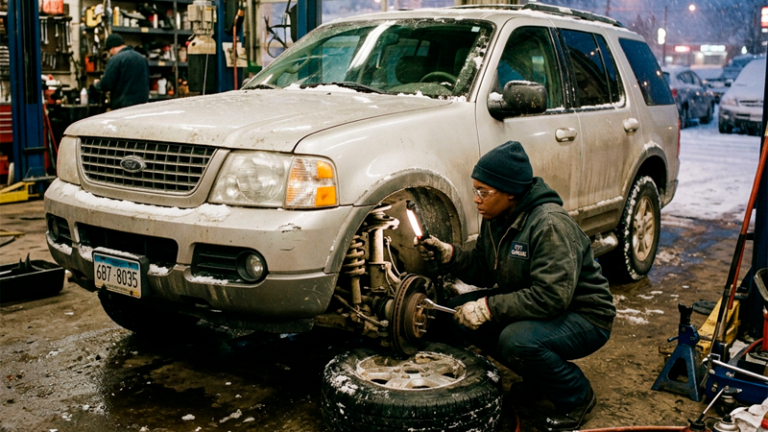
Maintenance expenses can sometimes be reduced as well.
The market has evolved faster than many consumer assumptions.
A vehicle category that once felt too small may now be entirely sufficient.
Some buyers are solving a space problem that no longer exists.
Reviewing actual usage patterns instead of relying on outdated assumptions can lead to better financial decisions.
Future possibilities should not dominate present realities
Vehicle purchases always involve uncertainty.
Nobody knows exactly what life will look like five years from now.
That uncertainty often encourages consumers to buy more capacity than they currently need.
Preparing for the future is reasonable.
Overpaying for unlikely scenarios is often less practical.
A family expecting occasional visits from relatives may only need additional seating a few times each year.
Someone considering future hobbies may never actually pursue them.
Potential needs deserve consideration, but they should not automatically control the purchase decision.
The most expensive vehicle is often the one purchased for possibilities rather than realities.
Many buyers pay thousands of dollars to prepare for situations that never occur.
Financially efficient vehicle ownership starts with honest assessment rather than optimistic assumptions.
The best family SUV is not necessarily the largest one available.
It is the one that supports daily life, matches actual transportation needs, and keeps ownership costs aligned with reality.
The smartest vehicle purchase is usually the most honest one
Many consumers assume that buying more vehicle automatically creates more value.
In reality, value comes from choosing a vehicle that matches how it will actually be used.
A larger SUV can be the right choice for some households.
For others, it may simply create higher payments, higher fuel costs, higher insurance expenses, and faster depreciation without delivering meaningful benefits.
The goal is not to buy the biggest vehicle possible.
The goal is to buy the vehicle that fits real life.
The most financially efficient decision is often the one based on current needs rather than distant possibilities.
When buyers evaluate their daily habits honestly, they often discover that a smaller and more affordable SUV already provides everything they need.
FAQ
Are three-row SUVs worth buying?
Yes. Households that regularly transport larger groups of passengers or frequently require additional cargo flexibility can benefit significantly from a three-row SUV.
Do larger SUVs always cost more to own?
In many cases they do. Purchase price, fuel consumption, insurance costs, and depreciation often increase alongside vehicle size and value.
What is the most overlooked SUV buying mistake?
Many buyers choose vehicles based on rare future scenarios rather than realistic day-to-day usage patterns.
Can a two-row SUV work for families?
Absolutely. Many modern two-row SUVs offer substantial interior space and comfortably meet the needs of a large number of households.
Used only with old Urchin versions of Google Analytics and not with GA.js. Was used to distinguish between new sessions and visits at the end of a session.
End of session (browser)
__utmz
Contains information about the traffic source or campaign that directed user to the website. The cookie is set when the GA.js javascript is loaded and updated when data is sent to the Google Anaytics server
6 months after last activity
__utmv
Contains custom information set by the web developer via the _setCustomVar method in Google Analytics. This cookie is updated every time new data is sent to the Google Analytics server.
2 years after last activity
__utmx
Used to determine whether a user is included in an A / B or Multivariate test.
18 months
_ga
ID used to identify users
2 years
_gali
Used by Google Analytics to determine which links on a page are being clicked
30 seconds
_ga_
ID used to identify users
2 years
_gid
ID used to identify users for 24 hours after last activity
24 hours
_gat
Used to monitor number of Google Analytics server requests when using Google Tag Manager
1 minute
_gac_
Contains information related to marketing campaigns of the user. These are shared with Google AdWords / Google Ads when the Google Ads and Google Analytics accounts are linked together.
90 days
__utma
ID used to identify users and sessions
2 years after last activity
__utmt
Used to monitor number of Google Analytics server requests
10 minutes
__utmb
Used to distinguish new sessions and visits. This cookie is set when the GA.js javascript library is loaded and there is no existing __utmb cookie. The cookie is updated every time data is sent to the Google Analytics server.