Buying a pre-owned European luxury SUV often feels like finding a loophole in the automotive market. You see a beautifully crafted machine that originally retailed for $75,000, now sitting on a used car lot for a tempting $22,000. The leather is pristine, the paint still gleams under the lot lights, and the prestige of the badge remains fully intact. However, crossing the six-figure odometer threshold in an aging German or British utility vehicle can quickly transform a perceived bargain into an ongoing financial burden. Buyers frequently underestimate how rapidly specialized engineering degrades after a decade on the road. Understanding the stark contrast between standard commuter car upkeep and premium European maintenance is essential before signing the title on a high-mileage luxury cruiser.
The Air Suspension Time Bomb and Complex Chassis Systems
Adjustable air suspension systems provide an incredibly smooth ride, but they represent one of the most certain and expensive failure points in aging luxury vehicles. Unlike traditional steel coil springs that last nearly the lifespan of the vehicle, rubber air bellows dry-rot, crack, and develop microscopic leaks over time. When an air strut fails, the onboard compressor must run continuously to maintain ride height, leading to a catastrophic secondary failure of the pump motor.
Replacing a full set of factory air struts and the accompanying compressor routinely costs between $4,500 and $7,000 at specialized independent shops. Choosing to ignore a sagging suspension over the weekend will completely ruin the vehicle’s handling characteristics and accelerate uneven tire wear. Furthermore, these heavy SUVs utilize intricate multi-link aluminum suspension setups with dozens of rubber bushings. When these bushings crack, owners face complete control arm replacements costing upwards of $1,800 per axle.
Plastic Engine Components and Chronic Oil Leaks
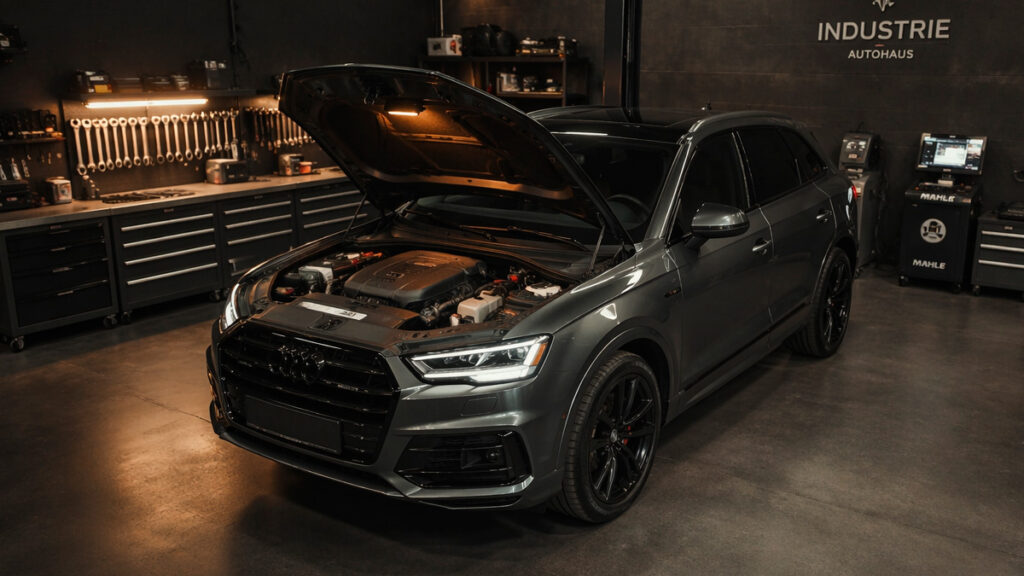
European manufacturers pioneered the extensive use of high-grade plastics under the hood to reduce engine weight and optimize thermal efficiency. Unfortunately, subjecting these plastic components to thousands of heat cycles over 100,000 miles causes them to become incredibly brittle and prone to sudden fracturing. Components like coolant expansion tanks, oil filter housings, and timing chain guides eventually turn into fragile glass-like material. A single hairline crack in a plastic coolant pipe can cause immediate engine overheating, warping aluminum cylinder heads and totaling the powertrain.
Fixing these chronic leaks requires significant labor because engineers pack these engine bays tightly, requiring technicians to dismantle half the front end for basic access. Replacing leaking valve cover gaskets and brittle oil pan seals often demands a financial investment of $2,500 or more in labor alone. Owners routinely discover that a minor oil drip is actually a sign of a failing rear main seal, which requires pulling the entire transmission. The true cost of ownership skyrockets when simple plastic clips require thousands of dollars in mechanical teardowns.
The Specialized Diagnostics and Proprietary Software Hurdle
Modern luxury SUVs operate as rolling supercomputers, utilizing interconnected electronic control modules that govern everything from the heated seats to the active roll stabilization. When an electronic malfunction occurs, generic code readers found at local auto parts stores cannot accurately diagnose the proprietary communication protocols. Owners are forced to seek out specialized independent facilities or factory dealerships that possess brand-specific diagnostic software subscriptions. Just plugging the vehicle into a factory diagnostic tool often commands a flat fee ranging from $150 to $250 before any actual repair work begins.
Furthermore, replacing basic components like a dead battery or an alternator is no longer a simple driveway DIY project. New batteries must be electronically registered to the vehicle’s charging module to prevent the alternator from overcharging and frying delicate wiring harnesses.An unregistered battery will suffer a severely shortened lifespan and can trigger phantom electrical glitches throughout the dashboard. This dependency on specialized digital infrastructure means that even minor electrical gremlins can leave your vehicle stranded in a workshop for days.
Aggressive Component Wear and Premium Consumable Prices
High-performance luxury SUVs weigh significantly more than standard sedans while generating massive horsepower numbers, creating an environment that destroys consumables rapidly. Heavy-duty braking systems designed to stop a two-and-a-half-ton vehicle from autobahn speeds utilize softer brake pad compounds and rotor materials. Consequently, owners must replace pads and rotors simultaneously every 25,000 to 30,000 miles, a service that regularly tops $1,200 per axle. Attempting to save money by installing cheap aftermarket brake components often results in persistent squealing and severely compromised stopping distances.
Tires represent another massive ongoing operating expense that catches secondhand buyers completely off guard. Large staggered wheel fitments ranging from 20 to 22 inches require specialized load-rated tires that wear out exceptionally fast due to aggressive factory alignment settings.A complete set of premium name-brand replacement tires frequently costs between $1,400 and $2,000 every two years. When you factor in the mandatory requirement for premium 91 or 93 octane fuel, the daily operational math shifts dramatically against the budget-conscious buyer.
Frequently Asked Questions
Is it safer to buy a high-mileage luxury SUV if it has a clean dealership service history?
While a documented maintenance history reduces the risk of neglect, it cannot prevent the natural degradation of rubber, plastic, and electronic modules.A meticulously maintained vehicle will still experience air suspension leaks and brittle plastic cooling components simply due to age and mileage. Regular service history guarantees the previous owner followed the rules, but it doesn’t change the underlying engineering complexity.
Can I save money on maintenance by using aftermarket parts instead of factory replacements?
Using cheap aftermarket parts on complex European vehicles often leads to premature component failure and compatibility issues with onboard electronics.High-quality European vehicles require premium OEM or original-equipment-supplier parts to function reliably over the long haul. Saving a few hundred dollars on a generic sensor or suspension component usually results in paying for the exact same labor twice when the part fails prematurely.
Which European luxury SUV brands tend to be the most expensive to maintain past 100,000 miles?
Vehicles featuring complex twin-turbocharged V8 engines and active air suspension systems, such as Land Rover and BMW, incur the highest long-term ownership costs.Brands that share platforms with more mainstream manufacturers, like Audi and Porsche, sometimes offer slightly better component availability but still command premium labor rates. Generally, the higher the original sticker price of the vehicle, the more expensive the replacement parts will be today.
Balancing Passion and Financial Reality
Stepping into the world of high-mileage luxury ownership requires shifting your expectations from standard vehicle maintenance to specialized asset management. The driving dynamics, cabin isolation, and sheer prestige of a premium European SUV are undeniable, providing an experience that mainstream vehicles simply cannot replicate. However, realizing the dream of driving a premium vehicle safely requires maintaining an emergency repair fund of at least $5,000 at all times. If a sudden four-figure repair bill will disrupt your monthly household budget, the true cost of driving that bargain luxury machine might be far higher than you are truly willing to pay.
Used only with old Urchin versions of Google Analytics and not with GA.js. Was used to distinguish between new sessions and visits at the end of a session.
End of session (browser)
__utmz
Contains information about the traffic source or campaign that directed user to the website. The cookie is set when the GA.js javascript is loaded and updated when data is sent to the Google Anaytics server
6 months after last activity
__utmv
Contains custom information set by the web developer via the _setCustomVar method in Google Analytics. This cookie is updated every time new data is sent to the Google Analytics server.
2 years after last activity
__utmx
Used to determine whether a user is included in an A / B or Multivariate test.
18 months
_ga
ID used to identify users
2 years
_gali
Used by Google Analytics to determine which links on a page are being clicked
30 seconds
_ga_
ID used to identify users
2 years
_gid
ID used to identify users for 24 hours after last activity
24 hours
_gat
Used to monitor number of Google Analytics server requests when using Google Tag Manager
1 minute
_gac_
Contains information related to marketing campaigns of the user. These are shared with Google AdWords / Google Ads when the Google Ads and Google Analytics accounts are linked together.
90 days
__utma
ID used to identify users and sessions
2 years after last activity
__utmt
Used to monitor number of Google Analytics server requests
10 minutes
__utmb
Used to distinguish new sessions and visits. This cookie is set when the GA.js javascript library is loaded and there is no existing __utmb cookie. The cookie is updated every time data is sent to the Google Analytics server.