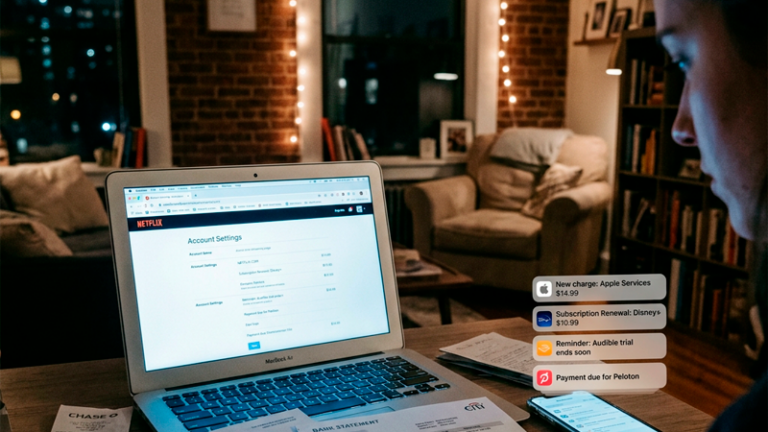
A growing number of Americans no longer think about purchases in terms of full prices. Instead, many consumers now evaluate products based on one simple question:
“How much is it per month?”
That shift may sound harmless at first, but it has started changing spending behavior across nearly every major industry in the United States. Cars, phones, furniture, streaming services, fitness apps, groceries, vacations, and even restaurant bills are increasingly tied to some form of recurring payment system.
For businesses, this created enormous profit opportunities.
For consumers, the long-term consequences are becoming harder to ignore.
A few years ago, financing was usually reserved for expensive purchases like homes or vehicles. Today, people are splitting $80 sneakers, $200 electronics, and even food delivery orders into smaller installments through buy now pay later services and subscription platforms.
Many consumers now carry over 10 recurring monthly charges without fully realizing how much they spend annually.
A purchase that feels “cheap” at $29 per month can quietly become a $348 yearly expense.
And households managing multiple subscriptions often underestimate their real financial commitments by thousands of dollars per year.
This shift is not only changing personal finances. It is changing the psychology of spending itself.
Small recurring charges became easier to ignore than large purchases
Most consumers still hesitate before making a large one-time purchase. Spending $1,500 upfront feels significant. The financial impact feels immediate and visible.
But many companies discovered something important about consumer behavior.
People react differently to smaller recurring payments.
A customer may reject a $900 fitness package, yet accept a $39 monthly membership almost instantly. Someone may avoid buying a $1,200 phone outright, but feel comfortable paying $55 per month for three years.
The math often becomes less visible once costs are distributed over time.
That psychological shift became one of the most powerful business models in modern consumer markets.
Streaming services understood this early. Then software companies adopted it aggressively. Car dealerships expanded long-term financing. Smartphone providers normalized upgrade cycles tied to monthly payments. Even luxury brands began experimenting with installment purchasing models.
Consumers slowly adapted to a lifestyle built around continuous billing.
Many households now operate almost entirely through recurring financial commitments instead of direct ownership.
The dangerous part is that recurring expenses rarely feel urgent individually.
A person may cancel a major purchase immediately while casually approving four different monthly subscriptions during the same week.
Over time, those small commitments accumulate quietly.
Subscription fatigue is becoming financially exhausting
A decade ago, paying monthly for entertainment usually meant cable television and maybe a gym membership.
Now the average consumer faces recurring charges from nearly every direction.
Music platforms.
Cloud storage.
Video streaming.
Meal delivery apps.
AI software tools.
Gaming memberships.
Fitness platforms.
Premium banking features.
Vehicle connectivity services.
Security monitoring.
Online learning subscriptions.
At first, each service feels affordable in isolation. But together, they can create a surprisingly heavy financial burden.
Many Americans started realizing this during periods of inflation and rising living costs. Grocery prices increased. Insurance became more expensive. Rent payments climbed sharply in many cities. At the same time, recurring digital expenses kept growing in the background.
Consumers who once spent $60 monthly on subscriptions are now often spending $250 to $500 without noticing the escalation immediately.
Several financial studies have shown that people frequently underestimate subscription spending because recurring payments become emotionally normalized.
Once charges become automatic, consumers stop evaluating them with the same level of scrutiny as one-time purchases.
That normalization is precisely what makes subscription-heavy lifestyles difficult to control financially.
Some consumers eventually reach a point where canceling services feels emotionally stressful because daily routines become dependent on them.
A streaming platform may feel necessary for family entertainment. A cloud storage service may contain years of personal files. A premium app subscription may become integrated into work productivity.
The result is a modern form of financial stickiness.
Retailers discovered that convenience often beats price awareness
Another major shift inside consumer behavior involves convenience spending.
Many businesses realized that consumers will often pay significantly more if the purchasing process feels faster, easier, or emotionally frictionless.
Food delivery apps became one of the clearest examples.
A meal originally costing $18 can easily reach $34 or more after delivery fees, service charges, tips, and platform markups. Yet millions of consumers continue using these apps regularly because convenience reduces mental resistance.
The same pattern appears across multiple industries.
People now pay extra for:
faster shipping
one-click checkout
same-day delivery
premium memberships
automatic renewals
digital convenience tools
flexible financing options
Convenience became emotionally valuable enough to justify higher costs.
And companies understand this extremely well.
Consumers are no longer paying only for products. They are paying to reduce effort, waiting time, and decision fatigue.
Businesses that simplify purchasing experiences often outperform cheaper competitors with more complicated systems.
That convenience premium became one of the most profitable forces in modern retail behavior.
For many households, however, this creates a difficult long-term pattern.
Small convenience purchases rarely feel financially dangerous in the moment. But repeated daily behavior can slowly reshape monthly budgets.
The illusion of affordability is affecting younger consumers especially hard
One of the most concerning aspects of modern consumer spending is how financing tools affect younger adults.
Many consumers in their twenties entered adulthood during a period where financing, subscriptions, and installment payments already felt normal. For them, monthly payment culture is not a new trend. It is simply standard financial behavior.
That normalization changes how people evaluate risk.
A younger consumer may view a $700 monthly car payment as manageable because it aligns with current market conditions, even if it creates major long-term financial pressure.
Similarly, financing furniture, electronics, vacations, and lifestyle purchases simultaneously can create extremely high fixed monthly obligations at relatively young ages.
Social media also amplifies this pressure constantly.
Luxury apartments, premium gadgets, expensive travel experiences, and aesthetic lifestyles appear online every day. Financing options make these purchases feel accessible even when incomes do not realistically support them.
Many consumers are building expensive lifestyles before building financial stability.
A growing number of households now prioritize appearance-driven spending while carrying extremely limited emergency savings.
The emotional pressure to “keep up” became easier to satisfy temporarily through financing systems.
But temporary affordability does not always translate into sustainable financial health.
Some consumers are starting to reverse course
Interestingly, a countertrend is beginning to emerge.
After years of recurring payments and digital subscriptions, some consumers are becoming more aggressive about simplifying finances.
People are canceling unused memberships.
Downgrading streaming plans.
Keeping phones longer.
Avoiding unnecessary upgrades.
Cooking more meals at home.
Buying fewer products with financing.
This shift is especially noticeable among consumers who experienced financial stress during inflation spikes over the last few years.
Many realized they were spending hundreds of dollars monthly on habits that barely improved quality of life long term.
That realization is pushing some households toward more intentional spending behavior.
Instead of asking “Can I afford this monthly payment?” people are beginning to ask larger questions about ownership, dependence, and long-term financial flexibility.
That mindset shift could become increasingly important over the next decade as subscription-heavy business models continue expanding.
FAQ
Why do monthly payments feel easier than upfront purchases?
Smaller recurring charges create less immediate emotional resistance than large one-time payments. Consumers often focus on short-term affordability instead of total long-term cost.
Are subscription services actually hurting consumer finances?
Not always. Many subscriptions provide real convenience and value. Problems usually appear when consumers lose visibility over total recurring spending across multiple services.
Why are buy now pay later services growing so quickly?
These services reduce purchase friction by making products appear more affordable immediately. Businesses benefit because installment options often increase conversion rates and larger purchases.
What industries rely most heavily on recurring payments now?
Streaming, technology, automotive, fitness, software, food delivery, gaming, cloud storage, and ecommerce services increasingly depend on recurring billing systems.
Conclusion
Monthly payment culture reshaped American consumer behavior far faster than many people expected.
What began as a convenient financing option gradually evolved into a broader lifestyle built around recurring spending, subscription dependence, and installment-based purchasing decisions.
For businesses, this model became incredibly profitable because smaller monthly costs often feel psychologically manageable.
For consumers, however, the long-term financial impact can become surprisingly difficult to track.
Many households are now discovering that convenience, subscriptions, and flexible financing create a quiet form of financial pressure that accumulates over time.
Some consumers continue embracing that system fully.
Others are beginning to step back and reevaluate how much of their income disappears automatically each month before they even notice it.
That growing awareness may become one of the most important consumer finance shifts of the next several years.
Used only with old Urchin versions of Google Analytics and not with GA.js. Was used to distinguish between new sessions and visits at the end of a session.
End of session (browser)
__utmz
Contains information about the traffic source or campaign that directed user to the website. The cookie is set when the GA.js javascript is loaded and updated when data is sent to the Google Anaytics server
6 months after last activity
__utmv
Contains custom information set by the web developer via the _setCustomVar method in Google Analytics. This cookie is updated every time new data is sent to the Google Analytics server.
2 years after last activity
__utmx
Used to determine whether a user is included in an A / B or Multivariate test.
18 months
_ga
ID used to identify users
2 years
_gali
Used by Google Analytics to determine which links on a page are being clicked
30 seconds
_ga_
ID used to identify users
2 years
_gid
ID used to identify users for 24 hours after last activity
24 hours
_gat
Used to monitor number of Google Analytics server requests when using Google Tag Manager
1 minute
_gac_
Contains information related to marketing campaigns of the user. These are shared with Google AdWords / Google Ads when the Google Ads and Google Analytics accounts are linked together.
90 days
__utma
ID used to identify users and sessions
2 years after last activity
__utmt
Used to monitor number of Google Analytics server requests
10 minutes
__utmb
Used to distinguish new sessions and visits. This cookie is set when the GA.js javascript library is loaded and there is no existing __utmb cookie. The cookie is updated every time data is sent to the Google Analytics server.