For years, many people believed large national companies would eventually dominate almost every industry in the United States. Bigger advertising budgets, lower operational costs, massive logistics systems, and aggressive expansion made it look almost impossible for smaller businesses to compete long term.
That prediction looked accurate for a while.
Large chains expanded into small towns. Online marketplaces reshaped shopping habits. Subscription services replaced local providers. Consumers started prioritizing convenience above almost everything else.
But over the last few years, something unexpected started happening across multiple industries.
Many customers quietly began returning to smaller local businesses, even when prices were slightly higher. In some cases, people willingly accepted longer wait times, fewer locations, and less convenience simply because the experience felt better, more personal, and more trustworthy.
What makes this shift interesting is that it is not happening because giant corporations suddenly became weak. Most of them are still extremely profitable.
The real change is happening inside consumer behavior.
People are becoming more sensitive to customer service quality, hidden fees, poor support experiences, and the growing feeling that large companies often treat customers like numbers instead of real people.
For small business owners, this shift created opportunities that barely existed a decade ago.
And surprisingly, many industries that once looked impossible to enter are becoming competitive again.
The customer experience gap became impossible to ignore
A few years ago, most consumers accepted poor customer support as part of modern life. Waiting on hold for an hour felt normal. Automated chat systems became unavoidable. Endless subscription cancellations and hidden service fees became common across banking, retail, streaming, travel, and even healthcare.
Now that frustration is starting to create financial consequences for larger companies.
Many consumers no longer care only about price. They care about responsiveness, human interaction, clarity, and whether a company actually solves problems without creating additional stress.
A local auto repair shop answering calls immediately can outperform a national chain with lower prices.
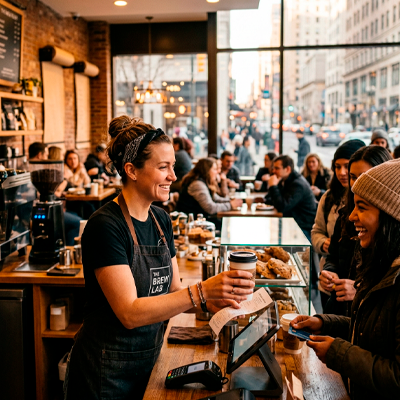
A family-owned café with loyal customers can survive against major coffee brands simply because regulars feel recognized and appreciated.
Even smaller marketing agencies are stealing clients from giant firms because communication feels faster and more transparent.
This behavioral shift matters because trust directly affects spending decisions.
When customers feel ignored, they stop recommending businesses. They leave negative reviews faster. They become more willing to test competitors. In industries with recurring payments or subscriptions, even a small increase in customer frustration can quietly destroy long-term revenue.
Large corporations often struggle to reverse this problem because scaling personal service across millions of customers becomes extremely expensive.
Smaller businesses, on the other hand, naturally operate closer to their clients.
That advantage suddenly matters again.
Operating costs started hurting large companies in unexpected ways
Bigger businesses usually benefit from scale, but scale also creates massive operational pressure during unstable economic periods.
A local business owner with five employees can adapt quickly. A national corporation with 15,000 employees, expensive office leases, investor expectations, and complex logistics systems moves far more slowly.
That difference became especially visible after inflation increased operational costs across the United States.
Shipping became more expensive. Commercial rent increased sharply in many cities. Insurance costs rose. Employee turnover became more expensive. Customer acquisition through online advertising also became dramatically harder.
Some companies responded by reducing customer support quality, increasing prices, or quietly adding new fees.
Consumers noticed.
A growing number of people now compare companies based on overall experience instead of advertised pricing alone. A business charging $15 more for a service may still win customers if the process feels easier, safer, and less stressful.
This is happening in industries people rarely expected.
Independent gyms are regaining members from large chains. Local bakeries are growing despite grocery store competition. Boutique clothing brands are building loyal audiences online without massive advertising budgets.
Many consumers became exhausted by the feeling of interacting with giant systems that prioritize efficiency above everything else.
Small businesses are benefiting from that emotional fatigue.
Online visibility changed the game for smaller companies
Ten years ago, local businesses depended heavily on physical traffic, newspaper advertising, or expensive marketing agencies.
Today, a small business with strong reviews, good social media content, and consistent online presence can compete surprisingly well against larger competitors.
Platforms like TikTok, Instagram, Google Reviews, and local Facebook groups changed customer discovery completely.
A single viral video showing a restaurant’s atmosphere can generate weeks of reservations. A contractor with strong before-and-after videos can outperform larger construction companies online. Independent coffee shops now build loyal communities through short-form content instead of traditional advertising.
What matters now is not only size.
Visibility matters.
Authenticity matters.
Consistency matters.
And in many cases, smaller businesses actually appear more trustworthy online because their content feels less polished and more human.
Consumers have become extremely good at detecting overly corporate branding.
People respond better to businesses that feel real.
A short video filmed inside a family-owned restaurant often performs better online than a highly produced national commercial because viewers emotionally connect with authenticity.
That creates opportunities for business owners who understand modern customer behavior.
Some industries are becoming dangerously competitive again
While this shift creates opportunity, it also creates new risks.
As more people realize smaller businesses can compete online, markets become crowded very quickly. Industries that once required huge startup capital now allow smaller players to enter much faster.
This is especially visible in:
marketing agencies
local food businesses
fitness coaching
home services
small ecommerce brands
car detailing services
content production
online education
independent consulting
Low startup barriers attract thousands of competitors.
That creates a dangerous illusion that “starting a business is easy.”
In reality, surviving long term became harder in different ways.
Customer expectations are extremely high now. Online reviews spread rapidly. Poor experiences become public immediately. Advertising costs fluctuate constantly. Trends change faster than before.
A business owner can gain traction quickly and still fail within a year if operational quality cannot keep up with demand.
This is where many small businesses make expensive mistakes.
Some focus entirely on branding while ignoring customer retention.
Others spend heavily on advertising before improving operations.
Many underestimate taxes, payroll costs, software expenses, insurance, and fulfillment problems.
A surprising number of small businesses generate strong sales while remaining financially unstable behind the scenes.
Revenue alone means very little if margins collapse.
Consumers are spending differently after years of financial pressure
Another important factor behind this shift is emotional spending behavior.
After years of inflation, subscription overload, rising housing costs, and financial uncertainty, many consumers became more selective about where their money goes.
People increasingly want purchases to feel meaningful.
A customer may cancel three streaming services and instead support a local restaurant every weekend. Someone may stop buying mass-produced products and spend more on handmade goods or smaller brands with stronger identity.
This behavior is not universal, but it is growing.
Consumers became more emotionally aware of where their money flows.
That affects business strategy significantly.
Large corporations usually optimize for volume and scale. Smaller businesses often compete through experience, loyalty, personalization, and emotional connection.
Right now, emotional connection is becoming financially valuable again.
And businesses that understand this shift are building extremely loyal audiences.
The businesses surviving long term usually share the same habits
Interestingly, the small businesses growing consistently right now are not always the cheapest, trendiest, or most aggressive online.
Many of them simply execute fundamentals extremely well.
They answer messages quickly.
They solve problems without excuses.
They maintain consistent quality.
They avoid overexpansion.
They build repeat customers instead of chasing only viral growth.
And perhaps most importantly, they understand that modern consumers remember bad experiences far longer than before.
One ignored email, one delayed refund, or one misleading advertisement can permanently damage trust online.
That pressure affects businesses of every size.
But smaller companies often adapt faster because owners stay directly connected to daily operations.
That flexibility became one of the biggest competitive advantages in modern business.
FAQ
Are small businesses actually outperforming large corporations financially?
Not across every industry. Large corporations still dominate many sectors financially. However, smaller businesses are regaining market share in industries where customer experience, trust, and personal interaction strongly influence buying decisions.
Why are consumers becoming more loyal to local businesses again?
Many customers became frustrated with poor support systems, hidden fees, and impersonal experiences from larger companies. Smaller businesses often provide faster communication, more flexibility, and stronger emotional connection.
Is starting a small business easier now because of social media?
Online platforms lowered marketing barriers significantly, but competition also increased dramatically. Visibility became easier, while long-term sustainability became harder.
Which small business sectors are growing fastest right now?
Industries connected to local services, content creation, specialized products, fitness, food experiences, and independent consulting continue showing strong growth potential in many parts of the United States.
Conclusion
The business landscape inside the United States is shifting in ways many people did not expect.
Large corporations still control enormous portions of the economy, but smaller businesses are quietly rebuilding competitive power through customer experience, adaptability, and authenticity.
Consumers are becoming more selective. They notice quality faster. They punish poor service faster. And increasingly, they are willing to support businesses that feel more human.
That does not guarantee success for small companies.
Used only with old Urchin versions of Google Analytics and not with GA.js. Was used to distinguish between new sessions and visits at the end of a session.
End of session (browser)
__utmz
Contains information about the traffic source or campaign that directed user to the website. The cookie is set when the GA.js javascript is loaded and updated when data is sent to the Google Anaytics server
6 months after last activity
__utmv
Contains custom information set by the web developer via the _setCustomVar method in Google Analytics. This cookie is updated every time new data is sent to the Google Analytics server.
2 years after last activity
__utmx
Used to determine whether a user is included in an A / B or Multivariate test.
18 months
_ga
ID used to identify users
2 years
_gali
Used by Google Analytics to determine which links on a page are being clicked
30 seconds
_ga_
ID used to identify users
2 years
_gid
ID used to identify users for 24 hours after last activity
24 hours
_gat
Used to monitor number of Google Analytics server requests when using Google Tag Manager
1 minute
_gac_
Contains information related to marketing campaigns of the user. These are shared with Google AdWords / Google Ads when the Google Ads and Google Analytics accounts are linked together.
90 days
__utma
ID used to identify users and sessions
2 years after last activity
__utmt
Used to monitor number of Google Analytics server requests
10 minutes
__utmb
Used to distinguish new sessions and visits. This cookie is set when the GA.js javascript library is loaded and there is no existing __utmb cookie. The cookie is updated every time data is sent to the Google Analytics server.