Most people blame inflation when grocery bills suddenly feel unreasonable. Prices definitely increased, but that is only part of what changed inside modern supermarkets.
The shopping experience itself became far more aggressive.
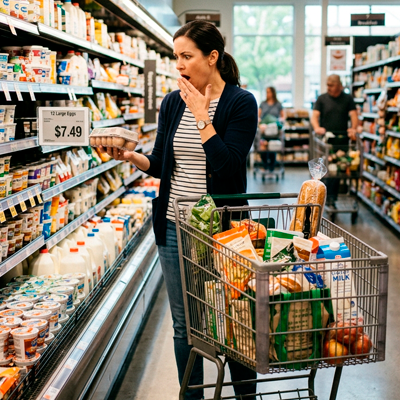
Consumers are now surrounded by pricing tricks, convenience traps, smaller packaging, loyalty systems, and product placement strategies designed to increase spending without creating obvious resistance. Many households are not only paying more for food. They are spending more because stores became extremely efficient at influencing buying behavior.
A grocery trip that once felt simple now functions more like a carefully engineered sales environment.
Smaller products made inflation harder to notice
One reason shoppers feel confused at checkout is because many products look almost identical to older versions while containing less.
Snack bags became lighter. Juice bottles shrank slightly. Frozen meals lost a few ounces. Toilet paper packs changed sheet counts. Coffee containers quietly dropped volume.
Consumers notice price increases faster than quantity reductions, which is exactly why companies use this strategy.
A pasta sauce jar increasing from $3.99 to $5.49 creates immediate frustration. Reducing the jar from 24 ounces to 20 ounces while slightly raising the price feels less dramatic psychologically, even though the real cost increase can be worse.
This has become extremely common across categories like:
cereal
yogurt
frozen foods
snacks
cleaning products
pet food
One hidden consequence is that households now replace products faster than before, leading to more shopping trips and more opportunities for impulse spending.
That secondary effect quietly increases grocery budgets even further.
Convenience food became normalized for average households
Prepared meals used to feel like occasional purchases.
Now many grocery stores dedicate enormous sections to ready-made food because convenience products generate significantly higher profit margins than basic ingredients.
Rotisserie meals, pre-cut vegetables, pre-seasoned meat, bottled smoothies, individually packaged snacks, and heat-and-eat dinners all save time. But they also change how households spend money permanently.
A family buying ingredients for homemade lunches might spend $18 to $25. The same family choosing prepared convenience options can easily spend $45 to $60 for similar meals.
The dangerous part is that convenience spending rarely feels excessive in the moment.
People are tired. Workdays are longer. Commutes are stressful. Spending extra for convenience feels emotionally justified after exhausting days.
Retailers understand this extremely well, especially during evening shopping hours when exhausted consumers become less price-sensitive.
Loyalty programs changed shopping psychology
Many shoppers believe loyalty programs exist mainly to help customers save money.
In reality, those systems are heavily designed around increasing spending frequency and tracking consumer behavior.
Stores now know:
which products customers buy regularly
how often they shop
when they spend the most
which promotions trigger purchases
how sensitive they are to discounts
That data allows retailers to create highly targeted offers designed to increase total cart value, not necessarily reduce spending.
For example, “Buy 3 and save” promotions encourage customers to purchase quantities they never originally intended to buy. App-exclusive discounts create urgency that pushes shoppers toward impulse decisions.
Consumers often leave believing they saved money because multiple products were discounted.
Meanwhile, the final total still rises.
One overlooked insight is that many households overspend more through loyalty promotions than through regular pricing because promotions psychologically reward larger purchases.
Grocery delivery apps removed spending friction
Shopping online feels completely different from shopping inside a physical store.
Inside supermarkets, customers naturally slow themselves down. They see the cart filling up. They physically handle products. That creates small moments where spending decisions feel more real.
Apps remove much of that resistance.
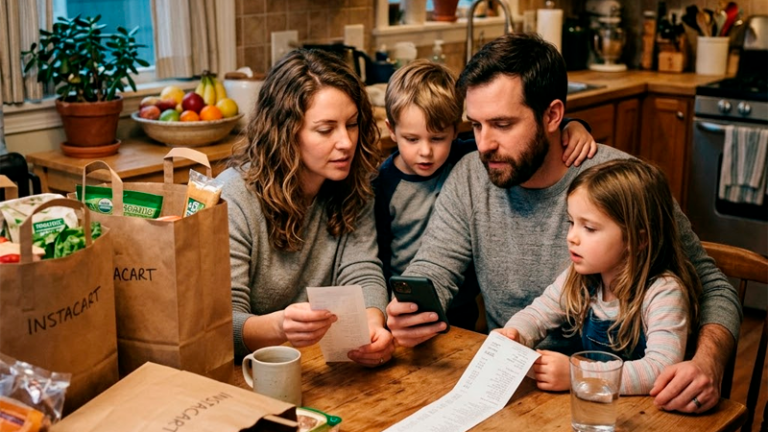
Adding another item requires almost no effort. Recommended products appear constantly. Limited-time deals feel immediate. Extra fees become fragmented enough that people stop calculating the full cost carefully.
A grocery order that begins around $70 can quietly exceed $110 after:
delivery fees
service charges
tips
higher app pricing
impulse additions
One major behavioral shift is that online shoppers tend to browse categories they were never planning to visit initially.
A consumer opening an app to reorder milk and bread may suddenly buy desserts, drinks, frozen snacks, and premium convenience items simply because algorithms pushed those products repeatedly.
Delivery saves time, but many frequent users underestimate how much those habits cost annually.
Cheap food sometimes creates expensive problems later
Consumers under financial pressure often focus entirely on reducing upfront grocery costs.
That makes sense initially. But the cheapest option is not always the most economical long-term choice.
For example, low-quality processed foods may seem affordable because they deliver high calorie counts cheaply. But they often provide weaker satiety, causing households to consume more snacks and additional meals later.
Some products also create waste problems.
Large discount packages purchased impulsively frequently expire before being fully consumed. Produce bought with good intentions gets thrown away days later. Bulk promotions encourage overbuying beyond realistic household use.
Food waste quietly drains grocery budgets more than most people realize.
The average household can lose hundreds of dollars yearly through spoiled food alone, especially when buying excessive quantities during promotions.
That is one reason disciplined shoppers often focus more on realistic consumption habits than simply hunting for the absolute lowest price.
Modern grocery stores are built around emotional spending
Retailers spend enormous amounts of money studying consumer behavior.
Warm bakery smells near entrances, colorful seasonal displays, checkout candy placement, slower background music, and premium items positioned at eye level are all intentional.
Even shopping cart sizes increased over the years because larger carts psychologically make purchases feel smaller.
Most people assume their grocery decisions are fully rational. In reality, shopping environments constantly influence pace, hunger, mood, and spending confidence.
That does not mean consumers cannot fight back.
Many households that successfully reduced grocery costs did not rely on extreme couponing or complicated budgeting systems. Instead, they changed a few specific behaviors:
fewer shopping trips
shorter lists
less convenience spending
avoiding hungry shopping
comparing unit prices carefully
ignoring fake urgency promotions
The biggest difference usually comes from awareness.
Because once people understand how aggressively modern grocery stores shape spending behavior, they start noticing how often expensive purchases were never truly planned in the first place.
Used only with old Urchin versions of Google Analytics and not with GA.js. Was used to distinguish between new sessions and visits at the end of a session.
End of session (browser)
__utmz
Contains information about the traffic source or campaign that directed user to the website. The cookie is set when the GA.js javascript is loaded and updated when data is sent to the Google Anaytics server
6 months after last activity
__utmv
Contains custom information set by the web developer via the _setCustomVar method in Google Analytics. This cookie is updated every time new data is sent to the Google Analytics server.
2 years after last activity
__utmx
Used to determine whether a user is included in an A / B or Multivariate test.
18 months
_ga
ID used to identify users
2 years
_gali
Used by Google Analytics to determine which links on a page are being clicked
30 seconds
_ga_
ID used to identify users
2 years
_gid
ID used to identify users for 24 hours after last activity
24 hours
_gat
Used to monitor number of Google Analytics server requests when using Google Tag Manager
1 minute
_gac_
Contains information related to marketing campaigns of the user. These are shared with Google AdWords / Google Ads when the Google Ads and Google Analytics accounts are linked together.
90 days
__utma
ID used to identify users and sessions
2 years after last activity
__utmt
Used to monitor number of Google Analytics server requests
10 minutes
__utmb
Used to distinguish new sessions and visits. This cookie is set when the GA.js javascript library is loaded and there is no existing __utmb cookie. The cookie is updated every time data is sent to the Google Analytics server.