Buying a used car feels like a smart financial move at first glance. Lower purchase price, slower depreciation, and more options for your budget. But after helping friends negotiate deals and fixing my own costly mistakes, one thing becomes clear fast: the real price of a used car is rarely what you see on the listing.
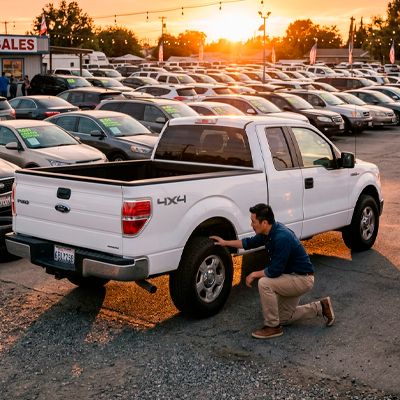
Many buyers focus only on the sticker price and monthly payment. That’s where things go wrong. A car that looks cheap upfront can quietly drain thousands of dollars later, especially if you don’t know where to look before signing.
The purchase price rarely reflects the real cost
Most listings are designed to catch attention. A low price, clean photos, maybe even “well maintained” in the description. But the advertised price often hides immediate expenses that hit within the first 30 days.
For example, a car listed at $9,500 might seem like a great deal. But once you factor in taxes, registration, insurance adjustments, and basic maintenance, you could easily spend an extra $1,500 to $2,500 almost immediately.
Buyers who skip this calculation usually end up stretching their budget thin. Worse, they rely on credit cards or short-term financing to cover these hidden costs, which adds interest and turns a “cheap car” into a long-term financial burden.
Maintenance history matters more than mileage
Mileage gets most of the attention, but it shouldn’t be your main focus. A car with 120,000 miles and solid maintenance records can be a safer choice than one with 70,000 miles and no history.
What really matters is how the car was treated over time. Oil changes, transmission service, brake replacements, and timing belt work all tell a deeper story than the odometer.
A common mistake is trusting verbal claims. Sellers often say the car was “well maintained,” but without documentation, that statement has no real value. Lack of maintenance records is not neutral — it’s a risk indicator.
If you’re unsure, assume you’ll need to catch up on neglected maintenance. That alone can cost $800 to $2,000 depending on the vehicle.
Cheap cars often come with expensive timing
Some issues don’t show up during a test drive. That’s what makes them dangerous. Certain repairs tend to appear shortly after purchase, especially if the previous owner delayed them intentionally.
Transmission slipping, suspension wear, cooling system failures — these aren’t always obvious in the first 20 minutes behind the wheel. But they can show up within weeks.
One overlooked insight is this: many used cars are sold right before a major maintenance milestone. Timing belts, for example, often need replacement around 90,000 to 120,000 miles. If that hasn’t been done, you’re inheriting that cost.
And if it fails? You’re not looking at a small repair. Engine damage from a broken timing belt can easily exceed $3,000.
Financing a used car can quietly increase the risk
A lot of buyers focus on getting approved rather than understanding the terms. That’s where things get risky. Used car loans often come with higher interest rates, especially if your credit isn’t strong.
Let’s say you finance $10,000 at a higher rate. Over time, you might pay $2,000 or more just in interest, depending on the terms. That completely changes the equation.
There’s another issue. Older cars tend to need repairs sooner. So you’re paying a monthly loan and covering unexpected maintenance at the same time.
Stacking debt and repair costs creates pressure, and many people end up selling the car early at a loss just to escape the situation.
Inspection is not optional if you want to avoid regret
Skipping a pre-purchase inspection is one of the most expensive mistakes you can make. It usually costs between $100 and $200, which feels like an extra expense at the time.
But compare that to the cost of missing a major issue.
A professional inspection can reveal hidden problems that are invisible to the average buyer. Frame damage, leaks, worn components — things that don’t show up in photos or quick test drives.
Even better, it gives you leverage. If issues are found, you can negotiate the price down or walk away entirely.
Buyers who skip this step often regret it later. Not because something small breaks, but because they discover problems that were already there before they bought the car.
Insurance and ownership costs can shift your budget
Another hidden factor is insurance. Many buyers assume their premium will stay the same. That’s not always true.
Different vehicles come with different risk profiles. A slightly newer or more powerful car can increase your monthly insurance cost significantly, even if the purchase price is similar.
Fuel consumption is another long-term cost people underestimate. A car that uses more gas might not seem like a big deal, but over a year, the difference can reach hundreds or even thousands of dollars depending on how much you drive.
And then there’s depreciation. While used cars lose value slower than new ones, not all models hold value equally. Choosing the wrong model can cost you more when it’s time to sell.
The decision that saves the most money isn’t obvious
Most buyers think saving money means finding the lowest price. In reality, the smarter move is finding the lowest total cost over time.
That often means paying slightly more upfront for a car with:
- Verified maintenance history
- Lower risk of major repairs
- Better fuel efficiency
- Stable resale value
It doesn’t feel like a bargain at first. But over one or two years, it usually results in fewer surprises, lower stress, and less money lost overall.
A cheap car can become expensive fast. A well-chosen car tends to stay predictable.
Buying a used car isn’t just about getting approved or finding something within budget. It’s about avoiding traps that aren’t obvious until it’s too late.
The biggest mistake isn’t overpaying — it’s underestimating the real cost of ownership. Once the problems show up, there’s no undo button. You either pay to fix them or pay to get out of the deal.